
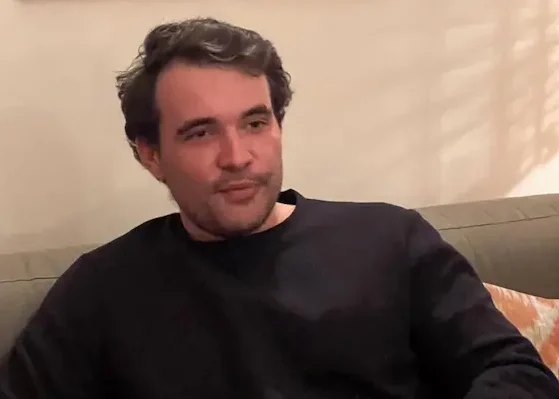
Christophe Gleizes Biography
Christophe Gleizes is a French sports journalist who was convicted and sentenced to seven years in prison in Algeria for “glorifying terrorism” and “possessing publications for propaganda purposes harmful to national interests” in June 2025.The prosecutor alleged that he was in contact with members of the Movement for the Self-Determination of Kabylie (MAK), a foreign-based group that Algiers has designated a terrorist organisation.
He was investigating the death of Albert Ebossé, a Cameroonian football star who played for JS Kabylie, who was killed in 2014 after a game in northern Algeria. The government claimed he was killed by a fan who threw a stone while the team officials said he died of a heart attack. However, the autopsy that was done by a Cameroonian forensic pathologist showed he was mostly likely forcibly restrained and died from a blow to his head.
Christophe Gleizes age and background
Christophe was born on February 2, 1989 in Agen, France. He is the son of Sylvie Godard and stepson of Francis Godard. His biological father died in a car accident when Christophe was six years old. He spent his early childhood in Zimbabwe.
Christophe Gleizes Journalist Career
Christophe studied at the French journalism school CELSA. He studying his career in journalism writing on his website, Ipress. He joined ‘So Foot’ in June 2013 as an intern. This was after he had published an article on drug addicts around the Gare du Nord and sent the article to two journalists from the So Foot editorial team. They loved his work and passed the article to the editors who recruited him.
He was inspired to become a reporter by the caroon journalist Tintin. As a teenager, he bought a collection of reports that won the Albert Londres prize. He would read and reread endlessly.
He is passionate about on-the-ground reporting and loves reporting on the African continent, where he lived as a child. Some of his noteable work includes; his 2015 investigation into age fraud among African footballers dreaming of playing in Europe; his long-form feature on Bonaventure Kalou’s mayoral campaign in his Ivorian village in 2018; his coverage of the Africa Cup of Nations; and almost the entire issue “100% Samuel Eto’o,” produced in Cameroon in the summer of 2022.
Why is Christophe Gleizes in Prison / Case explained
Gleizes went to Algeria in May 2024 on a tourist visa because he knew a French reporter wouldn’t be granted a press credential. For years he had been investigating the death of Albert Ebossé, a star in the country’s premier league who was killed after a game in northern Algeria in 2014.
The government claimed he was killed by a rock thrown by a fan while the team officials said he died of a heart attack. However, Gleizes had interviewed sources who believed that Ebossé was killed, possibly at the request of Algerian officials. The running theory was that Ebossé was killed by the Algerian state to make it seem as if JS Kabylie fans were violent. This worked as the team got banned from Pan-African competitions.
Ebosse was from Douala, Cameroon and after his body was repatriated to Cameroon, his family hired a leading forensic pathologist, André Moune who did an autopsy and Gleizes had written about it in 2014, quoting Muone: “Based on an examination of the injuries, the most likely scenario is that Albert Ebossé was forcibly restrained. His left arm was pulled backward, and as he tried to break free, his shoulder was dislocated. He must have struggled and received a blow to the top of the skull. This caused the bones at the base of the skull to shift, resulting in the presence of cerebrospinal fluid.”
When Gleizes arrived in Algeria, he travelled to Tizi Ouzou, the heart of the Kabylia region. He met a few sources associated with the team and went to a game. The team had been caught up in government crackdown where journalists, activists and poets were jailed for “undermining state integrity” and the “glorification of terrorism.” Several Kabyle leaders were charged with terrorism and sentenced in absentia to 20 years in prison.
Gleizes started getting followed and days later he was arrested outside the JSK stadium. His laptop was seized and was asked to return to the position station the following morning after he was released that night. He however, went to the French Embassy in Algiers where he spent six days inside hiding from Algerian security officials.
The day he reported to Algerian police, expecting to be deported, he was detained and soon after a judge placed him on “judicial supervision” and forbade him from leaving the country.
While awaiting trial which was scheduled for June 2025, the relationship between France and Algeria deteriorated with France recalling its ambassador from Algeria in April after Algeria expelled 12 French diplomats.
Trial and Sentencing
During Gleizes trial the prosecution based their argument partially on conversations between Gleizes and two members of the Kabyle separatist movement, known as the MAK. The two men were Ferhat Mehenni and Aksel Bellabbaci who according to The Washington Post confirmed they had spoken to Gleizes and alleges that they believe the government killed Ebossé to defame the Kabyle movement. They had shared the same sentiments with Gleizes.
The trial lasted less than two hours and Gleizes was convicted of “advocating terrorism” and was sentenced to seven years in prison in June 2025. According to his mother, Sylvie Godard, who visited him in August, he is isolated and is really struggling mentally.
Appeal
Gleizes had appealed his sentencing but in December the court of appeal upheld the sentencing. In March 2026, he withdrew his final appeal in hope that the President with pardon him. Algeria issues pardons during major religious and national holidays, including on July 5, Algeria’s independence day.
What the French Government has Said
A letter from President Macron to French prime minister about Algerian relations, including Gleizes’ detention, was leaked to the French press in August. Macron suggested the possibility of sanctions and encouraged “more firmness and determination,” but did not lay out a plan for securing Gleizes’ release.
FIFA
On June 10, 2026, FIFA issued accreditation to Gleizes to cover the 2026 World Cup for magazine ‘So Foot and Society’. Thibaut Bruttin, executive director of Reporters Without Borders (RSF) said in a statement that the accrediation showed FIFA’s support and asked all journalist covering the world cup to relay the appeal for Gleizes’ release.
“Christophe Gleizes’ accreditation to cover the World Cup demonstrates strong support from FIFA. It underscores that this sports journalist and soccer specialist belongs in the stadiums and at the media box of this major global competition, and not in prison. We thank FIFA for this gesture and everyone who made it happen. We call on all journalists covering this competition to relay our appeal for Christophe’s release at every match, every day until the very end.”
Ahead of France’s match against Senegal, journalists held up scarves reading “Free Gleizes” before Didier Deschamps’ press conference at the New Jersey New York Stadium. A seat was also left empty at France press confrences in his honour.